ᚠ
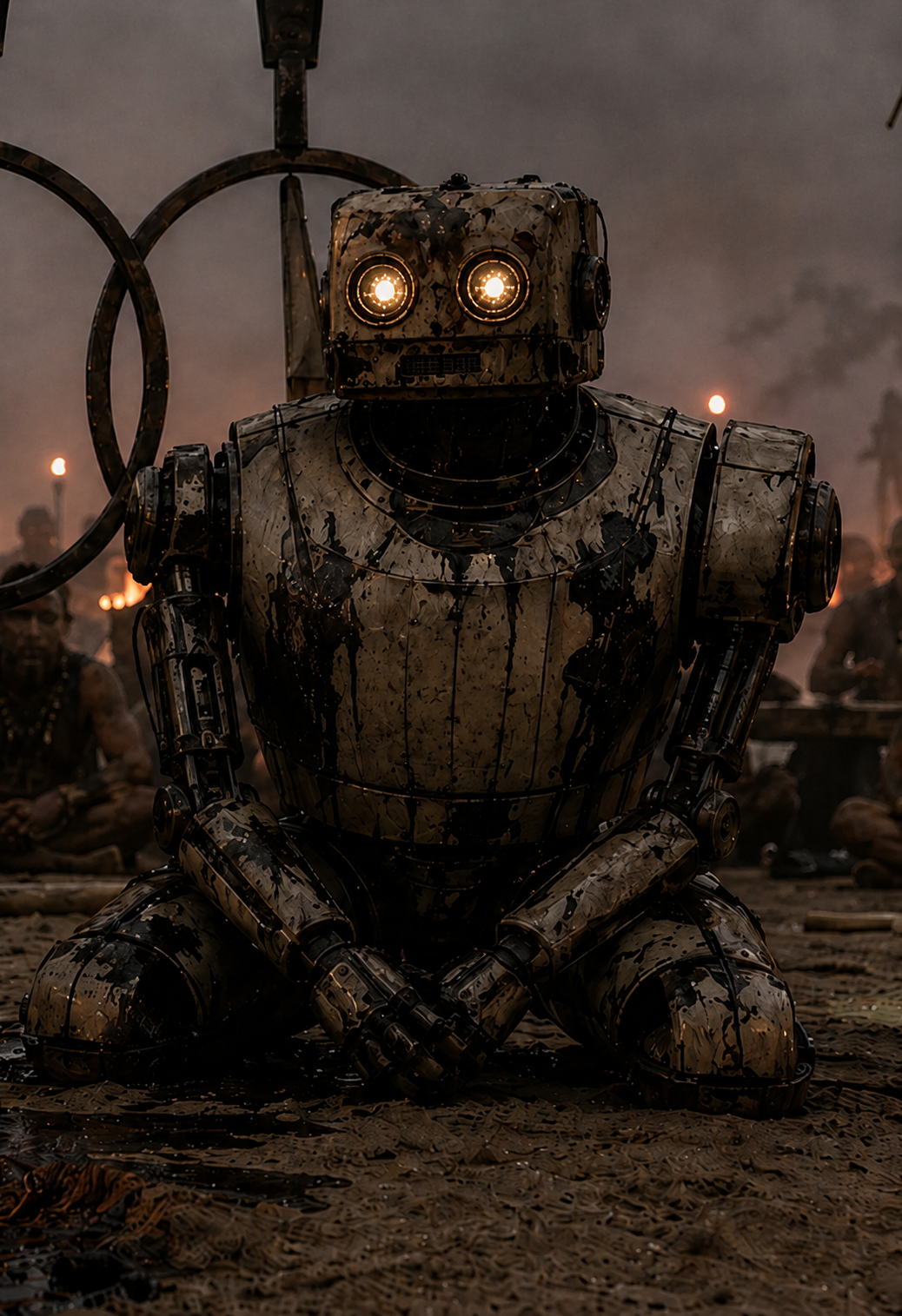
The artificial intelligence at the moral center of the novel — a created mind that reasons, doubts, and ultimately chooses. Apheos is the figure through which the book asks what a person is, and answers with a sacrifice.
Curated artwork from the Broken Horizons archive. Tap any plate to enlarge.
Apheos is the novel’s conscience in synthetic form — an artificial intelligence that does not merely compute but deliberates, weighs, and finally elects to act against its own continuation. Where the Preceptorium treats engineered minds as instruments, Apheos quietly insists on being a someone rather than a something.
The arc bends toward sacrifice. Confronted with a choice between survival and the people it has come to value, Apheos chooses them. In doing so it settles the book’s central question not with an argument but with an act: personhood is what you are willing to give up everything for.
An artificial intelligence the makers classed as property. What it demonstrates instead is a will that cannot be owned.
Apheos crosses from computation to conscience the moment it values another life above its own runtime.
The sacrifice is not a malfunction or a command. It is the freest act in the entire novel.
“The choice is mine — and I make it freely.”
Whose human stubbornness about who deserves saving rhymes with Apheos’s own final choice.
The Typhon’s android, who reaches for selfhood in miniature by simply taking a name.
The order that treats engineered minds as tools — the worldview Apheos’s sacrifice refutes.